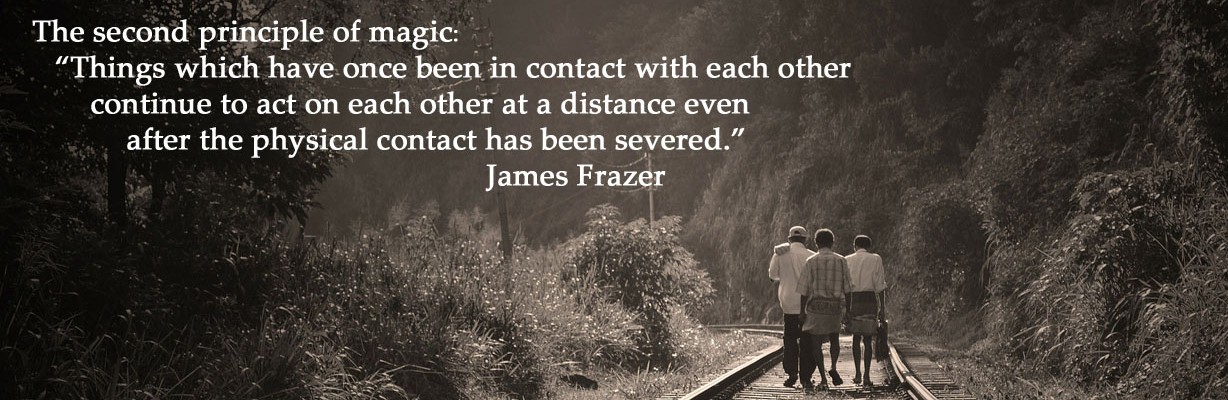
A Personal Reflection:
© Leslie Owen Wilson, Ed.D. theseondprinciple@gmail.com
We are like spokes on a wheel, all radiating out from the same center. If you define us according to our position on the rim, we seem separate and distinct from one another. But if you define us according to our starting point, our source – the center of the wheel – we are a shared identity.
Marianne Williamson
______________________________________________
Last evening, surfing all of my many streaming services, I landed on Netflix’s Spring 2026 broadcast of the return of BTS (Korean K-Pop Group). This very popular group began their collective journey in 2010 but had been on a 4 year hiatus while members finished their mandatory 18 months of military service.
Before you say, Leslie, you are old! Why the heck are you watching a k-pop group? Let me explain.
For all of those who do not know me and have not read between the lines of my many webpages on creativity or perused my thoughts about children, I am a very curious person about many aspects concerning life, teaching and education. Over my professional lifetime, I have been devoted to helping others understand how to raise creative children, as well as how to keep creativity alive in adults. I also strongly believe good teachers are keepers of the future and as such they should be aware of current youth culture. Understanding popular trends often speaks of things that are missing connections to the human collective unconscious. For me, observing things that appeal to both the general populace, and especially to today’s youth, are much like taking a temperature reading. For educators, it allows one to connect with their audience on more familiar and emotional levels.
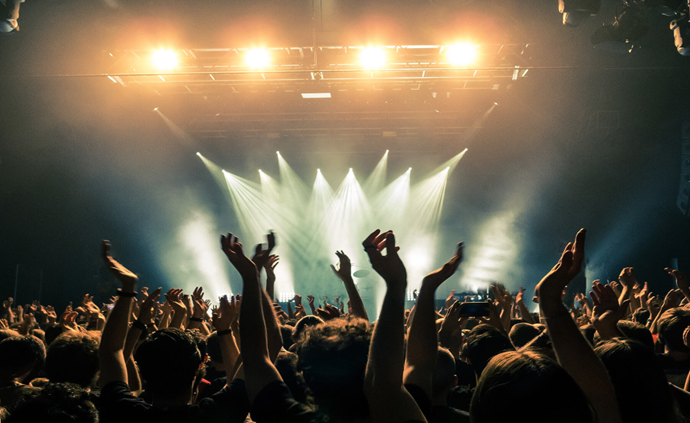
In this particular instance, the venue took up blocks and blocks in Seoul. By the end of the concert, the patterns and impressions I observed have stayed with me far longer than I expected. BTS is HUGE all over the world! Their popularity transcends Korea and has quickly permeated many other world cultures. If you have not seen them perform, or do not know who they are, you need to. Their talent, both individually and as a collective, is undeniable. But what struck me most was something deeper—something I believe speaks to a quiet and yet very strong yearning in our world today. This permeates the needs of today’s youth but it also resonates with many adults.
As I watched the concert, I began to notice patterns—not just in the music or the terrific choreography, but in the messages woven throughout the performance.
At various moments, the performers spoke openly to the audience about their personal growth, their struggles, and what they had learned during a period of separation and while in service to their country. What stood out to me was the ease with which they expressed vulnerability. Here were 7 handsome immensely talented young men, speaking honestly about their inner lives, sharing insights with one another and with the audience. It felt significant. In a time when positive, sincere emotional expression is often discouraged or commercialized, this openness felt like a much needed shift—an expansion of what strength can look like. It appeared to be a more positive, gentler example for young men.
Equally powerful was the way individuality and unity coexisted on the stage. Each performer had a distinct voice, style, costume, and presence. Yet, when they came together, their movements were synchronized, their purpose shared. It was not a loss of individuality, but rather a demonstration that one can remain fully oneself while still contributing to a greater whole. This balance—between self-expression and collective harmony—felt like a very potent metaphor for something our broader society is still struggling to achieve.
Even their appearance reinforced this idea. They did not try to look identical. Instead, they stood as individuals who clearly belonged together. It suggested that unity does not require sameness, and that differences, when respected, can strengthen rather than divide.
Throughout the performance, there were also moments of humor—lightness that revealed connection, trust, and ease among them. It reminded me that joy and play are not distractions from serious work, but essential parts of a healthy, functioning group.
By the end of the concert, I realized I was not simply entertained—I was encouraged. For me, what I had witnessed felt like a kind of living metaphor: a model of cooperation, emotional honesty, and shared purpose without the loss of identity.
Perhaps I am reading too much into what was meant to be shear entertainment. But I have come to believe that, at times, what rises in popularity reflects something we are collectively longing for. When the world feels fragmented, we are drawn—consciously or not—to images of integration, respect, and balance.
If that is the case, then perhaps this performance offers a small but meaningful sign of hope. Not because it solves anything directly, but because it shows us, in a vivid and very human way, what might still be possible.
And in times like these, even a glimpse of possibility matters, a lot!
So, BTS – V, Jung Kook, Jimin, RM, Jin, J-Hope, and Suga – from the heart of an old woman – thank you for that metaphor and my interpretive vision of hope.